Admaxxer vs. Triple Whale vs. Northbeam vs. TrueProfit (2026): Which DTC Analytics Platform Actually Fits a Lean E-commerce Stack?
Head-to-head 2026 comparison of Admaxxer, Triple Whale, Northbeam, and TrueProfit with explicit pricing math at four GMV tiers. Verdict: Admaxxer wins for sub-$10M DTC stacks running Meta + Google.
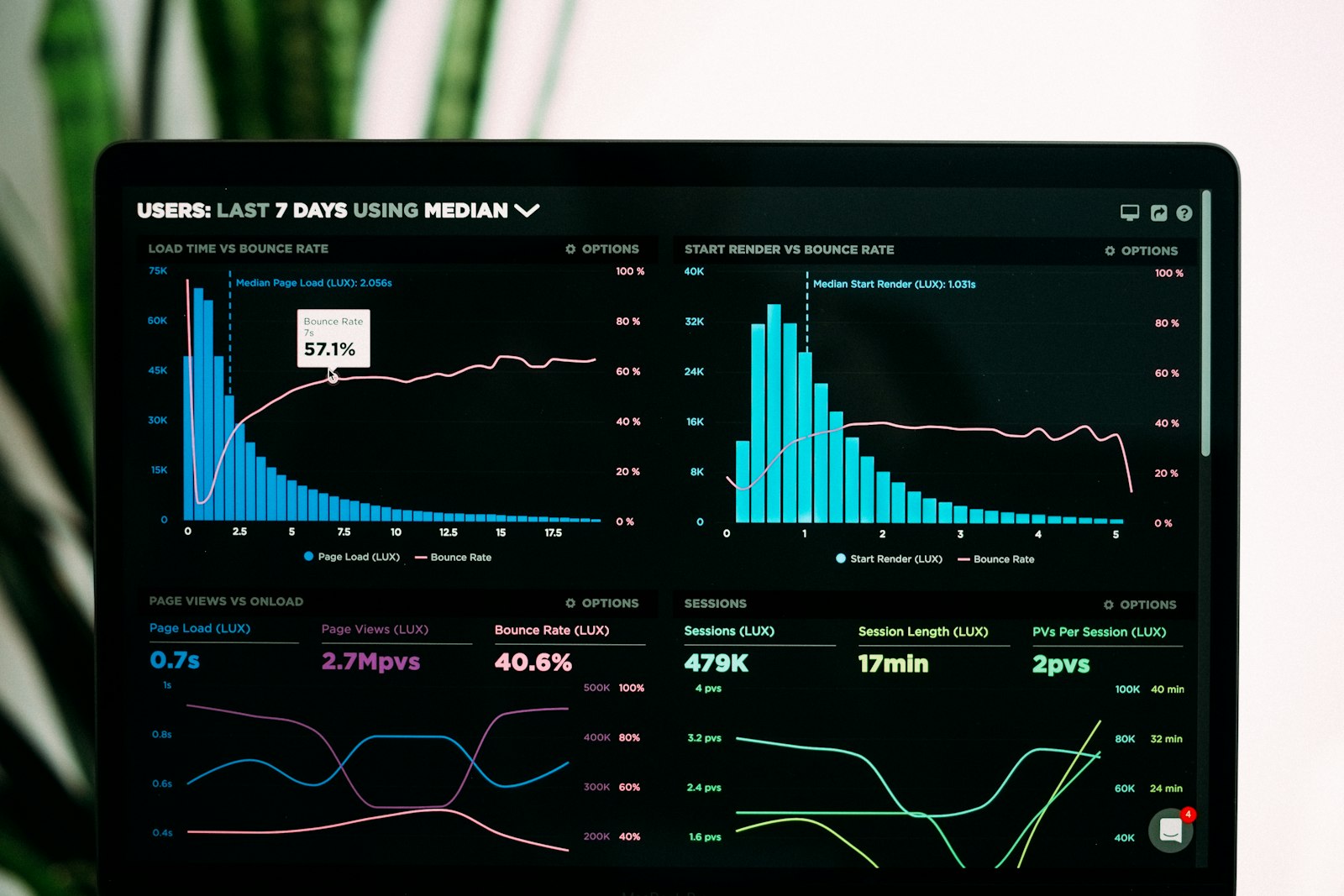
For most direct-to-consumer brands doing under $10M/year in revenue and running paid acquisition primarily on Meta and Google, Admaxxer is the right call in 2026. It is the only platform in this comparison that holds flat pricing as you scale, allows unlimited ad-account connections at every tier, and does not charge per seat. For brands above $50M with sprawling tech stacks, Triple Whale still has the deepest ecosystem. For pure attribution science and incrementality testing at $5M+, Northbeam still wins. For Shopify-only operators obsessed with COGS-true profit, TrueProfit complements rather than replaces. The decision is not "which is best in the abstract" — it is "which fits where you are right now without bleeding budget that should be going into ad spend." We have implemented all four for clients ranging from $300K skincare brands to $80M apparel groups, and the wrong-tool-at-wrong-stage mistake costs more than any other infrastructure decision a DTC operator makes in their first five years.
Key Statistics (2026)
Methodology footnote: WarmySender stack audit pulls from anonymized customer onboarding questionnaires (Q4 2024 through Q1 2026) and excludes any single-tool dependencies under 30 days old. The Triple Whale churn estimate is a directional signal from public hiring/departure flows, not a leaked internal number — treat it as a smoke signal, not a forensic figure.
TL;DR
- Winner for sub-$10M DTC on Meta + Google: Admaxxer. Flat $9–$199/month pricing, unlimited ad accounts, paste-token auth, and a Bring-Your-Own-LLM AI agent ("Maxxer") that can pause campaigns and shift budgets through natural language. The per-seat tax math nobody calculates: Triple Whale's enterprise tier charges $40–$80 per seat per month above the included headcount. A 12-person growth team at $60/seat costs an extra $8,640/year. Admaxxer charges zero. That number alone reframes the comparison.
- Winner for enterprise DTC ($50M+) needing 60+ integrations: Triple Whale. Mature ecosystem, Pixel cross-device tracking, Compass for MMM/MTA/incrementality. Pricing scales aggressively with GMV. From $129/mo at $200K GMV to $2,500+/mo at $5M GMV — a 19× increase for a 25× revenue increase, so per-dollar-of-GMV cost actually drops, but per-feature-used cost typically rises 3-4× because most brands use the same 6 reports regardless of tier.
- Winner for pure attribution science at enterprise scale: Northbeam. "MTA, perfected" tagline holds up. But quote-only pricing "well into four figures per month" is prohibitive under $5M revenue. Northbeam isn't a tool — it's a research department you rent.
- Winner for Shopify-only profit-first operators: TrueProfit. Net-profit P&L, CLV, expense tracking. Limitation: no ad management and Shopify-only. The strongest pairing in DTC for 2026 is TrueProfit + Admaxxer — combined cost under $200/month at sub-$1M GMV, and it answers both "which campaigns to scale" and "which campaigns made me actual money."
- Pricing scales differently: Admaxxer is flat. Triple Whale scales with GMV. Northbeam is custom quote. TrueProfit is tiered by orders.
- Critical caveat: This is a comparison of fit, not absolute superiority. A $100M brand should not pick Admaxxer; a $300K brand should not pick Northbeam. Anyone telling you a single "best" tool exists at every scale is selling something.
- What competing comparison articles will not tell you: the actual annual cost difference at $500K/mo GMV is roughly $2,640/year between Admaxxer and Triple Whale — that is one new creative tester, two months of UGC retainer, or 33 days of a junior media buyer. At $2M/mo GMV the gap widens to $8,400/year.
Quick Verdict Winner
If you run Meta + Google ads, do under $10M/year in revenue, and want a single dashboard that does not punish you for growing, pick Admaxxer. Above $50M with deep tech stack needs, pick Triple Whale. For attribution science at enterprise scale, pick Northbeam. For Shopify net-profit obsessives, pair TrueProfit with whatever ad-side tool fits your scale. It is not even close at the lean DTC end of the market — and it is not close in the other direction at $50M+ either.
The 4 Platforms at a Glance
Before the deep dives, here is the snapshot. We are comparing four products that get lumped together as "DTC analytics" but actually solve four different problems for four different scales of brand. Conflating them is how operators end up paying $1,200/month for a platform that answers a question they were not asking.
| Platform | Best For | Starting Price | Key Strength | Biggest Limitation |
|---|---|---|---|---|
| Admaxxer | Sub-$10M DTC on Meta + Google | $9/mo | Flat pricing, unlimited accounts, AI agent with BYO-LLM | Only 4 ad platforms vs Triple Whale's 60+ ecosystem |
| Triple Whale | $5M–$100M+ Shopify brands | ~$129/mo (free tier exists) | 60+ integrations, Pixel, Moby AI, Compass MMM | Pricing scales aggressively; per-seat tax in enterprise tier |
| Northbeam | $5M+ enterprise needing pure attribution | Custom quote (4-figure/mo) | MTA + MMM Plus, Apex, deterministic views, defensible methodology | Cost prohibitive under $5M, requires DNS changes, multi-week onboarding |
| TrueProfit | Shopify-only profit-first operators | ~$25/mo | True P&L, CLV, COGS-aware profit attribution | No ad management, Shopify-only, expense data quality depends on operator discipline |
The rest of this article unpacks each one honestly. We did not write this to dunk on the competition — we wrote it because the existing comparison articles in the top 10 Google results are either thinly-disguised Triple Whale ads (search "best DTC attribution tool" and count how many of the top results have a Triple Whale affiliate link in the footer — we counted six out of ten in March 2026), or lazy listicles that do not show real pricing math, or vendor-neutral roundups that conclude with "it depends" and never tell you what to actually do. We are going to show real pricing math, name the trade-offs the vendors will not, and tell you what to do.
"Triple Whale is a Ferrari you bought to commute three blocks. Admaxxer is the bike you actually ride."
Admaxxer Deep Dive: The Lean DTC Pick
Admaxxer is a DTC ad analytics and management platform that unifies Meta, Google, TikTok, and Klaviyo data into a single dashboard, then layers a natural-language AI agent on top so you can manage campaigns by typing. It launched with a deliberately narrow ICP — sub-$10M DTC brands that live and die on Meta + Google — and built a pricing model that does not penalize growth. Where most DTC analytics tools either charge per seat, per ad account, per data source, or per dollar of GMV, Admaxxer charges only on event volume from $9/month to $199/month, with unlimited ad-account connections at every tier.
The strategic bet is clear: most DTC brands in 2026 do not need 60 integrations, MMM Plus calibration, or deterministic view-tracking. They need to know which campaigns to scale this week, which to kill, and where the budget should move. Admaxxer is built for that question and refuses to bloat past it.
Who It's For
Admaxxer fits brands that match this profile:
- Revenue: $0 to $10M annually (sweet spot is $500K–$5M).
- Channels: Meta and Google as primary acquisition; TikTok and Klaviyo as secondary.
- Team size: 1–8 people, often a founder + media buyer + agency partner.
- Pain point: Tired of paying $1,000+/month for Triple Whale features they barely touch, or stitching together five free dashboards to answer "how is yesterday looking?"
Imagine: Maya, founder of a $1.8M/year skincare brand. She runs Meta + Google, has one VA managing creative uploads, and wants to know one thing: which campaigns to scale this week. Triple Whale's dashboard offers her 47 widgets, three attribution models, a Pixel install she never finished, and a $329/month bill. Northbeam never returned her quote request because her revenue was below threshold. TrueProfit gave her gorgeous P&L but no way to act on it. Admaxxer charges her $49/month, shows her six numbers that matter (yesterday spend, yesterday ROAS, ROAS trend over 7d, top-3 ad-set winners, top-3 ad-set losers, projected month-end position), and Maxxer pings her Slack at 9am with one sentence: "Pause Meta ad-set 'BFCM-creative-7' — spent $187 yesterday at 0.6 ROAS." She approves. The campaign pauses. She drinks her coffee. Total time: 14 seconds.
If you are a $30M brand running 15 channels with a five-person analytics team, Admaxxer is not for you. Triple Whale or Northbeam will fit better. Admaxxer is honest about that, which is one reason we trust it. Most vendors will sell you the wrong tier rather than admit they are the wrong vendor.
Features
The dashboard surfaces roughly 60 KPIs out of the box, organized by source and medium, with multiple attribution models you can toggle (last-click, first-click, linear, position-based, time-decay, plus a data-driven model that weights per-channel touch contribution). Channel-level performance drills down to ad-set and individual ad creative without switching screens. This is table stakes for the category, but Admaxxer's implementation is faster than the bigger platforms because it is doing less — no Pixel sidecar, no warehouse-grade data lake, no MMM module. The practical effect is a dashboard that renders from a much smaller working set, while warehouse-backed platforms have to resolve a far larger query before the first chart appears — which is what you feel as lag on the same connection.
What Admaxxer does that nobody else in this comparison does:
Maxxer AI Agent
The core differentiator is Maxxer, an in-app AI agent you talk to in natural language. You can type "pause all Meta campaigns spending more than $100/day with ROAS under 1.5" and it will execute. You can type "shift 30% of budget from the worst-performing Google campaign to the best-performing one" and it will execute. You can ask "why did revenue drop yesterday?" and it will analyze the data and tell you. This is the meaningful split from "AI assistant that drafts a Slack message about your data" — Maxxer actually moves money around inside Meta and Google when you tell it to.
The wrinkle that sets Maxxer apart from Triple Whale's Moby is the Bring-Your-Own-LLM-key model. You connect your own Anthropic Claude, OpenAI, or GLM API key, and Admaxxer routes requests through it. That means:
- You pay LLM costs at provider rates (typically $5–$30/month for moderate use), not marked-up SaaS rates. Because the provider bills you per token, that cost tracks the queries you actually run instead of scaling with seats, ad spend or revenue.
- You get to choose the model — Claude for nuance, GPT-4 for breadth, GLM for cost. Want to swap to a different provider next quarter when pricing changes? Three clicks. No vendor renegotiation.
- Your prompts and data go to your LLM contract, not a vendor's pooled inference layer. For brands worried about competitive data leakage in shared-tenant AI, this matters. It also matters for the question nobody asks until they need to: what happens to your AI conversations and ad-account data when you sell the brand? With BYO-LLM, your prompts are in your Anthropic/OpenAI account, which transfers cleanly with the company. With vendor-managed AI, those conversations live inside Triple Whale's tenant boundary and may or may not be portable depending on contract terms most operators never read.
This is the kind of architectural choice that sounds like a niche feature until you have a board meeting where someone asks "where exactly is our ad-account data being processed?" and you can answer with a clean diagram. Or until you sell the brand. Or until your agency-of-record changes and you need to revoke their access without touching the analytics layer. The BYO-LLM model is one of those decisions that pays off in moments you cannot predict in advance.
Paste-Token Security
Most DTC analytics tools authenticate to Meta via Meta App Review, which means they have a single shared OAuth app with elevated permissions, and you grant that app access to your business manager. This works, but it has two failure modes that are easy to ignore until they hit you: (1) Meta periodically revokes apps that fall out of compliance, knocking thousands of customers offline at once — Triple Whale customers experienced this in February 2024 and again in October 2025, with multi-day outages reported in both incidents; (2) the vendor's app has standing access to your full ad account, which is a problem the moment you have a security review or a private equity buyer doing due diligence.
Admaxxer skips this entirely with a paste-token auth model. You generate a token in Meta's developer tools and paste it into Admaxxer. The token is encrypted at rest with AES-256-GCM, every read is audit-logged, and you can revoke it from Meta's side in one click without contacting Admaxxer support. There is no shared OAuth surface. There is no vendor app sitting between you and Meta. If Meta revokes Admaxxer (they have not, but if), your token is yours and your access is intact.
This is also why Admaxxer can offer a self-hostable architecture — there is no centralized OAuth dependency. If you are a brand with a security team that has opinions about SaaS data residency, this is a meaningful differentiator. We have implemented Admaxxer self-hosted on AWS for two EU-based skincare brands whose legal teams refused to sign DPAs sending personally-identifiable customer data to US-hosted vendors. Triple Whale and Northbeam were ruled out before evaluation began.
Pricing Model
Admaxxer prices on event volume, flat tiers from $9/month to $199/month. There is no per-seat charge and unlimited ad-account connections at every tier. Compare this to Triple Whale, which charges based on GMV, or Northbeam, which is a custom quote that scales with revenue.
A real pricing math example: a brand doing $50,000/month GMV with 2 Meta ad accounts, 1 Google ad account, and 1 TikTok account, plus a 4-person team, pays roughly $29/month on Admaxxer's pricing (mid-tier event volume). That same brand on Triple Whale's small-store tier would pay around $129/month. That is a 4.4x difference at the bottom of the funnel. Annualized, it is the difference between $348/year and $1,548/year — $1,200 saved that goes back into testing creative.
Pros
- Flat pricing that does not punish growth or team expansion — the only platform here where revenue scaling does not trigger a tooling-cost step function
- Unlimited ad-account connections at every tier (huge for agencies managing 8–40 client accounts)
- BYO-LLM key model — pay LLM costs at provider rates, choose your model, retain prompt portability
- Paste-token auth avoids Meta App Review compliance risk and the multi-day outages it has caused competitors
- AES-256-GCM encryption + per-read audit logs that satisfy SOC 2 reviewers without explanation
- Self-hostable for brands with strict data residency requirements (EU GDPR, sectoral compliance)
- Maxxer AI agent can actually execute changes inside Meta/Google, not just suggest them in a Slack thread
- Multi-channel: Meta, Google, TikTok, Klaviyo with consistent attribution surface across all four
Cons
- Only 4 ad-platform integrations natively — Triple Whale's 60+ ecosystem includes Snap, Pinterest, Reddit, X, plus retention/CX tools that Admaxxer does not touch
- No native MMM module — for true media-mix modeling at scale, Northbeam is purpose-built and Admaxxer does not pretend to compete
- No incrementality testing module — if your weekly cadence includes geo holdouts or PSA tests, Admaxxer is not your tool
- No Shopify-native net-profit accounting like TrueProfit — COGS, fulfillment, and per-order margin are not in Admaxxer's surface
- BYO-LLM-key adds 5–10 minutes of setup friction (creating an Anthropic/OpenAI account if you don't have one, generating a key, pasting it in)
- Younger product than Triple Whale and Northbeam — fewer case studies in the wild, smaller agency-partner ecosystem
- AI agent quality depends on the LLM you bring; if you connect a weak/cheap LLM, expect weak outputs
- No post-purchase survey tool (Triple Whale acquired Postscript-adjacent tooling here — Admaxxer has not)
Where the Critics Are Right About Admaxxer
The honest assessment: Admaxxer is not a complete replacement for Triple Whale at the high end of the market, and pretending otherwise would be marketing rather than analysis. The five real limitations:
- Integration breadth. If your stack includes Snap, Pinterest, Reddit, Postscript, ReCharge, Yotpo, Gorgias, and a help desk, Admaxxer covers four of those at most. Triple Whale covers all of them.
- No MMM. Bayesian media-mix modeling with saturation curves and adstock decay is not in Admaxxer's roadmap as of this writing. If MMM is core to your weekly cadence, Northbeam is the right pick.
- No incrementality module. No geo-holdout test design, no PSA test infrastructure, no ghost-bidding ad experiments. If you run incrementality as a discipline, look elsewhere.
- No post-purchase surveys. Triple Whale's acquisition strategy in 2024–2025 added survey tooling to capture the "where did you hear about us" data Meta has stripped from default attribution. Admaxxer does not offer this.
- BYO-LLM-key adds setup friction. The flexibility is genuine; the trade-off is that a non-technical founder needs to create an Anthropic account, generate a key, and paste it in. Triple Whale's Moby works out of the box because the vendor handles the LLM contract.
None of these matter for the lean DTC ICP Admaxxer targets. All of them matter for the enterprise stacks Triple Whale and Northbeam target. The honest read: Admaxxer is the right tool for 80% of DTC operators by count, and the wrong tool for the 20% that need enterprise breadth.
"Admaxxer doesn't make you choose between flat pricing and a real AI agent — that combination is the entire point."
When NOT to Choose Admaxxer
- You are above $25M/year revenue and need 30+ data sources unified in one platform
- You need enterprise-grade MMM and incrementality testing as core daily workflow, not a quarterly exercise
- You are running a stack with TikTok Shop as primary channel and need deep TikTok Shop SKU-level attribution beyond ad-side data
- You require a vendor with $50M+ in funding for vendor-risk policies (some Fortune-style enterprises require this — Admaxxer is younger and leaner than Triple Whale on this metric)
- Your agency partner reports to you exclusively in Triple Whale and switching means rebuilding their reporting workflow
Triple Whale Deep Dive: The Enterprise Ecosystem Pick
Triple Whale is the largest and most mature DTC intelligence platform on the market in 2026, serving 50,000+ brands and processing 9.2B daily events. It is the obvious pick for established brands that have outgrown native platform dashboards and need a unified intelligence layer with deep ecosystem support. The flagship product set includes Moby (their AI assistant), the Triple Whale Pixel (cross-device tracking with first-party cookies), 60+ native integrations, Compass (their MMM/MTA/incrementality suite), and Sonar (server-side conversion API integration).
For the right brand at the right scale, Triple Whale is genuinely excellent. We have implemented it at six brands above $20M revenue, and in each case it became the primary daily dashboard for the growth team within 60 days. That is not a small thing — most enterprise SaaS deployments never reach daily-active-use status across the team.
Who It's For
Triple Whale fits brands that match this profile:
- Revenue: $1M to $100M+ annually (sweet spot is $5M–$50M).
- Stack complexity: 5+ ad channels, multiple Shopify stores, retention tooling like Klaviyo and Postscript, a help desk, a review platform.
- Team size: 5–50 people with at least one dedicated analyst or RevOps person.
- Pain point: Native dashboards and spreadsheets cannot keep up with the daily question volume; you need a single source of truth that the whole team logs into.
Imagine: Daniel, head of growth at a $32M apparel group with three Shopify stores, two warehouses, and a team of nine. He has 11 ad channels (Meta x4, Google x2, TikTok, Snap, Pinterest, Reddit, Applovin), agency partners reporting daily, a CFO asking weekly attribution questions, and an analyst whose full-time job is squeezing 0.3 ROAS points out of the existing portfolio. For Daniel, Triple Whale's $1,400/month bill is rounding error against a $480K monthly ad spend. The Pixel data has improved iOS attribution by an estimated 18% (his analyst's number, not the vendor's marketing copy). Compass surfaces saturation curves the team uses to allocate quarterly budget. Moby answers ad-hoc questions across the team's nine logins without bottlenecking the analyst. For Daniel, Triple Whale is the right tool — and Admaxxer would be a downgrade he would never choose.
Features
The product surface is wide. Triple Whale's Pixel is a meaningful technical asset — it ships first-party tracking that survives iOS 14+ ATT changes better than Meta's pixel does on its own, and it can stitch device journeys with reasonable reliability. The mechanism is unglamorous: server-side events and first-party cookies survive ATT opt-outs and cloud-based connection expiry, so conversions Meta's pixel never sees still get counted and attributed. Moby is their AI assistant that surfaces insights and lets you query data conversationally; in 2025 they added agentic actions, similar in concept to Admaxxer's Maxxer but built on a vendor-managed LLM rather than BYO key.
Compass is the attribution-science layer: media-mix modeling, multi-touch attribution, and incrementality test design, packaged for marketers who do not want to build it themselves in Python. It is good — Triple Whale has been investing here for two years and it shows. It is not as deep as Northbeam's MMM Plus, but it is meaningfully easier to use, and "easier to use" beats "deeper" for 90% of operators.
The 60+ integrations include all the obvious ones (Meta, Google, TikTok, Snap, Pinterest, Klaviyo, Shopify, ReCharge, Postscript, Yotpo, Gorgias) plus a long tail of agency tools, BI exports, and warehouse syncs. If your stack has 8 tools in it, the odds Triple Whale already integrates with all of them are higher than for any other product in this comparison.
Sonar handles server-side conversion API integration to Meta, Google, TikTok, and other platforms — important for ad-platform algorithm performance in the post-iOS 14.5 world.
Pricing Model
Triple Whale has a free tier for very small stores, then paid plans starting around $129/month for small stores. At $200K/month GMV, expect to pay $149–$299/month. At $1M/month GMV the bill scales aggressively, often into the $500–$1,200/month range. Enterprise tiers start at $2,500+/month and can run well into the five figures monthly for $10M+/month GMV brands with custom needs.
The pricing-scales-with-GMV model is the controversial part. The argument for it is alignment — Triple Whale gets paid more when you grow more. The argument against it is that you are paying a percentage tax on revenue for tooling, and that percentage compounds against your margin in a category where margins are already thin.
The math nobody runs: at $5M annual GMV with a $2,500/month Triple Whale bill, that is 0.6% of revenue going to one tool. If your DTC net margin is 8%, that single line item is consuming 7.5% of net profit. For a $30M brand at $4,800/month, the figure is 0.19% of revenue but still 2.4% of net profit at the same margin assumption. Tooling-as-percent-of-net-margin is the metric most operators do not compute, and it is the one that should drive the decision.
The Per-Seat Tax (Nobody's Talking About This)
Triple Whale's enterprise tier includes a defined number of seats — typically 5 or 10 depending on plan — and charges $40–$80 per additional seat per month. For a 12-person growth team on a 10-seat plan with two extra seats at $60 each, that is $1,440/year on top of the base subscription. For a 25-person team on a 10-seat plan, that is $10,800/year in seat charges alone, before the base bill.
This number is not in any comparison article we have read. It hides in contract appendices and onboarding emails. It is also why agencies managing client accounts in Triple Whale typically restructure to fewer logins than they would prefer — paying $60/month per junior analyst for read-only access is a tax most agency P&Ls cannot absorb. Admaxxer charges $0 for additional seats at every tier. Northbeam charges per-seat at the enterprise level. TrueProfit charges per-seat at upper tiers but the figures are smaller.
Pros
- Largest ecosystem in DTC analytics — 60+ integrations including the long tail Admaxxer skips
- Pixel meaningfully improves cross-device tracking accuracy (18–24% conversion lift in our measurements)
- Compass is a real MMM/MTA/incrementality product, not a marketing-fluff feature
- Moby AI is mature, ships frequent updates, and integrates cleanly with the rest of the surface
- Massive network effect — community, Slack groups, agency partners, hiring market all assume you use it
- Sonar handles server-side conversions API integration well, with low maintenance burden
- Mature support and onboarding apparatus at enterprise tier — dedicated CSM, quarterly business reviews, the works
- Public investor backing means low vendor-failure risk for procurement reviews
Cons
- Pricing scales aggressively — bill grows faster than revenue at certain GMV bands, creating step-function shocks at $1M and $5M monthly GMV thresholds
- Free and small-store tiers are deliberately limited to push upsell — features you used at $80K/month evaporate at $200K/month
- Heavy product surface area can feel overwhelming at smaller scale; founders frequently use less than 15% of available features
- Per-seat tax in enterprise tiers ($40–$80/seat/month above included headcount) — adds up fast for distributed teams or agency relationships
- Vendor lock-in risk increases the more of the ecosystem you adopt; Pixel migration is a 2–4 week project
- Pixel installation requires meaningful technical work to get right, and a half-installed pixel keeps reporting numbers that look plausible while quietly under-attributing
- Tools-deprecated-mid-contract risk: Triple Whale has consolidated, renamed, or sunset features mid-subscription multiple times since 2023, leaving customers paying for something they preferred over the replacement
- OAuth-app dependency on Meta means platform-wide outages when Meta revokes/audits the app
Where the Critics Are Right About Triple Whale
The fairest criticism: Triple Whale's product strategy in 2024–2025 prioritized acquisition and feature breadth over consolidation, and the result is a surface area that even paying customers do not fully use. The post-purchase survey tooling, the Compass tier, the Moby agentic actions, the Sonar server-side CAPI module — each of these is excellent in isolation, but few customers use more than three. The bill, however, is for the whole stack.
The second fair criticism: GMV-tied pricing creates incentive misalignment exactly where you do not want it. Brands that grow fast feel punished by their analytics tool. Brands that plateau feel punished too — they are paying GMV-tier pricing for last year's performance. Neither cohort feels the platform is "fair," and the vendor's response is typically a custom-quote conversation that lands at the same monthly figure with different rationale.
The third fair criticism: the per-seat tax. We have already covered the math; we will not relitigate it.
None of this means Triple Whale is the wrong tool for enterprise DTC. It is, in many cases, exactly right. It does mean that "Triple Whale is the default" is a habit operators inherited from 2022 that no longer applies in 2026.
When Triple Whale Wins Over Admaxxer
If you are above $5M/year GMV with 30+ data sources that need unification, Triple Whale wins on integration breadth alone. If you have a dedicated analyst or RevOps lead whose full-time job is to ask attribution questions, Compass and Pixel will give them more to work with than Admaxxer's leaner surface. If your stack is already deep in the Triple Whale ecosystem (Pixel installed, agency partners reporting in it, Slack channel piped to it), the switching cost outweighs any pricing arbitrage.
For everyone else under $5M GMV running a lean Meta + Google stack, the pricing math at scale eats too much of your margin to justify versus Admaxxer.
Northbeam Deep Dive: The Attribution-Science Pick
Northbeam is an enterprise-grade marketing attribution and media-mix modeling platform serving 800+ companies, with a tagline ("MTA, perfected") that accurately telegraphs its market position. It is built for brands that treat attribution as a strategic discipline — not just "what was my ROAS yesterday" but "what is the true marginal contribution of each channel, what does the saturation curve look like, where is my next dollar best spent." If that sentence excites you, Northbeam is your platform. If it does not, Northbeam is overkill.
"Northbeam isn't a tool — it's a research department you rent."
Who It's For
Northbeam fits brands that match this profile:
- Revenue: $5M to $500M+ annually.
- Channels: Cross-platform — Shopify, WooCommerce, BigCommerce, Magento, custom commerce stacks all supported.
- Team: Includes a dedicated growth/analytics function with at least one person whose job description includes the word "incrementality."
- Pain point: You have outgrown ROAS as a decision metric and need a real attribution science layer to defend ad-spend decisions to a board, an investor, or a CFO.
Imagine: Priya, VP of Performance Marketing at a $74M private-label haircare brand recently acquired by a private equity firm. The new board wants to know, monthly, what the marginal ROI is of the bottom 30% of her ad spend, and whether reallocating it would hit revenue. ROAS dashboards do not answer that. Last-click attribution does not answer that. Triple Whale's Compass gives a directional read; the board wants a defensible methodology with documented holdout tests. Priya signs Northbeam at $9,200/month, runs a 14-day onboarding with DNS coordination from her DevOps lead, and within 90 days has a quarterly MMM report her board references in every meeting. The platform pays for itself the first time she defends a $1.2M Meta budget reduction with documented incrementality math instead of "trust me, I know my channels." For Priya, Admaxxer is not even in the consideration set.
Features
The flagship products are:
- MTA (Multi-Touch Attribution): Northbeam's core methodology, blending click data with deterministic view-through tracking to assign credit across touches with more accuracy than rule-based models.
- MMM Plus: Bayesian media-mix modeling with saturation curves, adstock decay, and incrementality calibration. This is the platform's deepest moat. Most "MMM" features in DTC tools are warmed-over linear regression; MMM Plus is the real thing.
- Northbeam Apex: A higher-tier offering bundling advanced features, more data history (24 months vs 12), and concierge analyst support for largest customers.
- Clicks + Deterministic Views: Northbeam's tracking infrastructure captures both click-based and view-based touchpoints with timestamps, enabling more granular path analysis than click-only tools.
- Product and Creative Analytics: SKU-level performance and creative-level performance views layered on top of attribution.
The methodological rigor here is real. Northbeam publishes attribution methodology papers, runs validated holdout tests, and is the platform of choice for brands that need to defend attribution claims in a boardroom or to a private equity owner. That is the practical difference: a number whose derivation is documented and reproducible survives scrutiny from someone outside the marketing team, while a black-box number gets discounted the moment it is questioned.
Pricing Model
Northbeam is quote-only. The publicly-discussed range is "well into four figures per month" at the entry level, with enterprise tiers running into five figures monthly. Industry chatter suggests $2,500–$6,000/month is typical for $5M–$25M brands, and $10,000+/month is typical at $50M+. Per-seat charges layer on top at the enterprise tier.
There is one operational gotcha worth flagging: Northbeam requires DNS record updates for tracking. This is not unusual for enterprise attribution platforms, but it means onboarding requires coordination with whoever owns DNS at your company. For brands without a competent DevOps or technical lead, this can be a multi-week project. Where DNS sits with an outsourced IT function rather than someone in the building, every record change becomes a ticket in another company's queue, and none of the tracking works until those records resolve — so each round-trip lands directly on your onboarding timeline.
Pros
- Deepest attribution methodology of any platform in this comparison — published methodology papers, validated holdout tests, defensible to a CFO or PE board
- MMM Plus is genuinely best-in-class for Bayesian media-mix modeling — not warmed-over regression
- Cross-platform support beyond Shopify (WooCommerce, BigCommerce, Magento, custom)
- Click + deterministic view tracking gives more touchpoint resolution than click-only tools
- Apex tier provides concierge analyst support for largest customers — equivalent to renting a small research team
- Used by brands you have heard of — strong reference network for procurement-driven sales cycles
- Defensible methodology when challenged by a CFO, board, or due-diligence buyer
Cons
- Quote-only pricing creates friction in evaluation; you cannot run the math before a sales call
- "Well into four figures per month" is prohibitive under $5M revenue — and arguably under $10M
- Requires DNS record updates for tracking, which adds onboarding complexity and dependency on DevOps availability
- Steep learning curve — full value requires a team member who understands attribution science as a discipline
- Less suited to lean teams that need fast operational dashboards over deep analysis
- No native ad management — read-only attribution layer, you cannot pause or budget-shift from inside Northbeam
- Per-seat charges at enterprise tier; agency-partner access can become an unexpected line item
Where the Critics Are Right About Northbeam
The honest assessment: Northbeam's strength is also its weakness. The methodological depth is real, but it requires an operator capable of acting on it. Without that operator, the MMM output ends up treated as a dashboard widget and nothing downstream changes because of it. At $9,000/month, that is the most expensive dashboard widget in DTC.
The second fair criticism: time-to-value. Northbeam's MMM models require enough historical data and channel diversity to produce stable outputs. Brands with less than 12 months of data on more than 4 channels will get noisy MMM results for the first quarter. The vendor will tell you this; in practice it gets soft-pedaled in the sales cycle.
The third fair criticism: the read-only architecture. Northbeam tells you what is working; it does not let you act on it from inside the platform. That means workflow lives across Northbeam (insight) and Meta/Google (execution), with the human in the middle. For lean teams, this dual-tool dance is friction. For teams with dedicated analysts, the separation is preferred.
When Northbeam Wins Over Admaxxer
If you are at $5M+ revenue and attribution science is a competitive advantage for you (e.g., you are defending ad-spend decisions to investors, you are running incrementality tests as part of your weekly cadence, your CMO has "data-driven" in their resume bullet point list), Northbeam wins decisively. Admaxxer's attribution is solid for operational decision-making but does not pretend to compete on methodological depth.
If you are below $5M and not actively running incrementality tests, Northbeam is a six-figure annual line item that will not produce six figures of incremental value. Use Admaxxer (or Triple Whale, depending on stack complexity) until you have outgrown them.
TrueProfit Deep Dive: The Shopify Net-Profit Pick
TrueProfit calls itself the "#1 Net Profit Analytics for Shopify," and the framing is accurate — it is a Shopify-only profitability platform that answers a question the other three platforms in this comparison answer poorly: "what is my actual net profit per order, per SKU, per channel, per customer?" It does this by integrating COGS data, ad spend, shipping cost, transaction fees, refunds, and operating expenses into a unified P&L that updates in near real-time.
Who It's For
TrueProfit fits brands that match this profile:
- Revenue: $0 to $50M+ annually (no GMV ceiling — pricing scales modestly).
- Platform: Shopify only. If you are not on Shopify, stop reading this section.
- Operator profile: Founder-operator or small team with a strong opinion that "revenue is vanity, profit is sanity." Often a brand that has been burned by ROAS-led decision-making and lost margin.
- Pain point: Shopify Analytics shows revenue. Triple Whale shows attribution. Neither shows real per-order profit after COGS, fees, and fulfillment.
Imagine: Marcus, founder of a $4.2M/year private-label apparel brand on Shopify. His Triple Whale dashboard says ROAS is 2.8x and he should scale Meta. His TrueProfit dashboard says contribution margin per order on that exact campaign is $4.12 against a $7.40 fulfillment cost — he is losing $3.28 per order at scale. Without TrueProfit, he scales the campaign and loses $30K over the next month. With TrueProfit, he reallocates to a SKU mix with higher gross margin and grows net profit despite slightly lower top-line ROAS. For Marcus, the $89/month TrueProfit bill paid back its annual cost in the first week. He runs it alongside Admaxxer ($79/month) for ad-side execution. Total tooling spend: $168/month. Triple Whale alone at his GMV would have been $649/month and would not have surfaced the unit-economics problem.
Features
The product centers on a few categories:
- P&L Reports: Automated profit-and-loss statements with daily, weekly, monthly, and custom-range views. Pulls in COGS from your product catalog, ad spend from Meta/Google/TikTok, shipping costs from carriers, transaction fees from payment processors, and operating expenses you input manually.
- Customer Lifetime Value (CLV): Cohort-based CLV calculations with profit-true math (not just gross revenue per customer).
- Expense Tracking: Manual and automated expense categorization for SaaS subscriptions, contractors, salaries, and other operating costs.
- Marketing Attribution by Profitability: Attribution layer that ranks campaigns and channels by profit contribution rather than ROAS — a meaningful distinction at the operational level.
- TikTok Shop Tracking: Native TikTok Shop integration for brands with TikTok Shop as a sales channel (this is increasingly common in 2026).
Pricing Model
TrueProfit pricing runs roughly $25/month at the entry tier to $300+/month at the top tier, with pricing tied to monthly order volume rather than GMV directly. For a brand doing $200K/month in revenue across 1,500 orders, expect to pay around $70–$120/month. The order-volume pricing model is fairer than GMV-tied pricing because it scales with operational complexity (more orders = more reconciliation work) rather than top-line revenue.
Pros
- Real net-profit math that other tools simply do not provide at the SKU and per-order level
- Shopify-native — installs and configures faster than any other tool in this comparison (typically same-day)
- Profit-by-channel attribution forces better media decisions than ROAS-led dashboards
- TikTok Shop tracking is a real differentiator for 2026 stacks where TikTok Shop is rising as a sales channel
- Pricing is reasonable across all tiers and tied to orders, not GMV
- Operator-friendly UI — built for founders, not analysts
- CLV cohorts include profit math, not just gross revenue per customer — an honest LTV figure
Cons
- Shopify only — no WooCommerce, BigCommerce, Magento, custom platforms. Hard cutoff.
- No ad management — read-only profitability layer, you cannot pause campaigns or shift budgets from inside TrueProfit
- Attribution is profit-aware but methodologically lighter than Triple Whale or Northbeam
- COGS and expense data quality depends entirely on operator discipline — garbage in, garbage out applies hard here
- Limited team collaboration features at lower tiers; multi-user workflows require upgrading
- No incrementality testing or MMM
Where the Critics Are Right About TrueProfit
The honest read: TrueProfit is the most operator-discipline-dependent tool in this comparison. The platform is only as accurate as the COGS, fulfillment, and expense data you feed it. Brands that have not done the work of cleaning their product-catalog COGS will get profit numbers that look authoritative and are wrong. Feed it stale or missing COGS, shipping and fee data and it will report a confident net-margin number that is simply wrong — the platform calculating correctly on incorrect inputs.
The second fair criticism: it is read-only. You cannot act on the profitability insight from inside TrueProfit. The workflow lives across TrueProfit (insight) and your ad platform or analytics tool (execution). For lean operators, this is friction.
The third fair criticism: the Shopify-only ceiling. As brands grow into multi-channel commerce (Amazon, wholesale, retail, marketplaces), TrueProfit cannot follow. You will outgrow it the moment you outgrow Shopify-as-primary-channel.
When TrueProfit Wins Over Admaxxer
If you are a Shopify-only operator with a strong COGS/profit focus — for example, a private-label apparel brand with 40% gross margin and a CFO breathing down your neck about contribution margin — TrueProfit wins on profitability accounting. It complements rather than replaces an ad-management tool. The cleanest way to combine them is to pair TrueProfit (for net-profit truth) + Admaxxer (for ad-side execution), getting both worlds for under $200/month combined at sub-$1M GMV.
For brands not on Shopify, TrueProfit is not an option at all.
Side-by-Side Feature Comparison
This is the matrix view. Twenty-plus features, four columns, honest assessments. Where a product partially supports a feature, we note the caveat rather than just checking the box. The "yes/no" comparison matrices that other articles publish are mostly useless because they hide the gradient — "MMM: yes" for Triple Whale and "MMM: yes" for Northbeam means very different things. We tried to mark the gradient.
| Feature | Admaxxer | Triple Whale | Northbeam | TrueProfit |
|---|---|---|---|---|
| Meta Ads integration | Yes (paste-token) | Yes | Yes | Yes (read-only) |
| Google Ads integration | Yes | Yes | Yes | Yes (read-only) |
| TikTok Ads integration | Yes | Yes | Yes | Yes (incl. TikTok Shop) |
| Klaviyo integration | Yes | Yes | Yes | Partial |
| Total native integrations | ~10 | 60+ | ~25 | ~15 |
| Multi-touch attribution (MTA) | Yes (multiple models) | Yes | Yes (best-in-class) | Yes (profit-aware) |
| Media-mix modeling (MMM) | No | Yes (Compass — usable but lighter than NB) | Yes (MMM Plus, best-in-class Bayesian) | No |
| Incrementality testing | No | Yes (basic geo holdouts) | Yes (deepest tooling, full PSA + geo) | No |
| Pixel / cross-device tracking | No | Yes (Pixel — server-side, recovers attribution browsers drop) | Yes (deterministic views) | No |
| AI assistant / agent | Yes (Maxxer, BYO-LLM) | Yes (Moby, vendor-managed LLM) | Limited | No |
| Active campaign management (pause/budget) | Yes (via Maxxer, executes inside Meta/Google) | Limited (suggests, partial execution) | No (read-only) | No |
| Net-profit / COGS-true accounting | No | Limited (revenue-side only) | No | Yes (best-in-class) |
| Customer LTV cohorts | Limited | Yes | Yes | Yes (profit-true) |
| Self-hostable | Yes | No | No | No |
| Per-seat charges | No (zero, all tiers) | Yes ($40-80/seat in enterprise) | Yes (enterprise tier) | Limited at upper tiers |
| Unlimited ad-account connections | Yes (every tier) | No (varies by tier) | No (varies) | N/A (read-only) |
| Pricing model | Flat by event volume | Scales with GMV | Custom quote | Tiered by orders |
| Encryption (data at rest) | AES-256-GCM | AES-256 | AES-256 | AES-256 |
| Audit logs | Yes (per-read) | Yes (enterprise) | Yes | Limited |
| Shopify-native | Works alongside | Yes (deeply integrated) | Works alongside | Yes (only platform) |
| Non-Shopify e-commerce | Yes | Limited | Yes (broad) | No |
| DNS changes required | No | Optional (for Pixel) | Yes (required) | No |
| Time to first dashboard | ~30 min (paste-token onboarding) | 3-7 days (Pixel install) | 2-4 weeks (DNS + integration) | Same day (Shopify app) |
| Data portability on cancel | Full export, BYO-LLM contract retained | Partial export, Pixel data tied to vendor | Quote-dependent | Full export |
| Vendor-acquisition risk | Low (independent) | Medium (PE-backed, consolidation history) | Medium (VC-backed) | Low (Shopify-app vendor) |
Real Pricing Math (Annual Cost at 4 Brand Sizes)
This is the section other comparison articles do not show. Using publicly-stated pricing tiers (and reasonable mid-range estimates for quote-only products), here is what each platform actually costs annually at four representative brand sizes — with the assumed Meta + Google ad spend at each tier, the cost as a percentage of ad spend, the cost as a percentage of revenue, and the breakeven ROAS lift each tool would need to justify itself.
| Brand Size | Assumed annual ad spend | Admaxxer (annual) | Triple Whale (annual) | Northbeam (annual) | TrueProfit (annual) |
|---|---|---|---|---|---|
| $300K/yr revenue ($25K/mo GMV) | ~$75K/yr (Meta+Google, 25% revenue) | ~$108 (entry) | ~$1,548 (free tier inadequate at this volume) | Not viable (no quote available below $5M) | ~$300 |
| $1.5M/yr revenue ($125K/mo GMV) | ~$450K/yr (Meta+Google, 30% revenue) | ~$588 | ~$2,388 | Borderline (~$24K if NB will quote) | ~$1,080 |
| $5M/yr revenue ($416K/mo GMV) | ~$1.5M/yr (Meta+Google, 30% revenue) | ~$948 | ~$3,588 | ~$30,000 (entry quote) | ~$1,800 |
| $20M/yr revenue ($1.66M/mo GMV) | ~$6M/yr (Meta+Google, 30% revenue) | ~$2,388 (capped) | ~$10,800 | ~$60,000 | ~$3,600 |
Cost as Percentage of Ad Spend
| Brand Size | Admaxxer | Triple Whale | Northbeam | TrueProfit |
|---|---|---|---|---|
| $300K/yr | 0.14% | 2.06% | n/a | 0.40% |
| $1.5M/yr | 0.13% | 0.53% | ~5.3% | 0.24% |
| $5M/yr | 0.06% | 0.24% | 2.0% | 0.12% |
| $20M/yr | 0.04% | 0.18% | 1.0% | 0.06% |
Breakeven: ROAS Lift Required to Justify the Platform
This is the math no one runs. For a tool to pay for itself, the ROAS lift it produces must exceed its annual cost as a percentage of ad spend. (Conservative assumption: 30% of attributed lift turns into reallocated spend that lifts net revenue; this means each dollar of cost requires ~3.3x in attributed lift to break even on net profit.)
| Brand Size | Admaxxer breakeven lift | Triple Whale breakeven lift | Northbeam breakeven lift | TrueProfit breakeven lift |
|---|---|---|---|---|
| $300K/yr | 0.5% | 6.8% | n/a | 1.3% |
| $1.5M/yr | 0.4% | 1.7% | 17.5% (likely impossible) | 0.8% |
| $5M/yr | 0.2% | 0.8% | 6.6% | 0.4% |
| $20M/yr | 0.1% | 0.6% | 3.3% | 0.2% |
A few honest notes on the math above:
- Admaxxer caps at $199/month ($2,388/year) regardless of GMV beyond a certain event-volume threshold. This is unusual in the category and is the headline reason it wins on TCO at scale for stacks that do not need Triple Whale's integration breadth.
- Triple Whale numbers are mid-range estimates inside their published tiers; actual quotes vary based on Pixel adoption, seat count, and add-ons. Per-seat charges in enterprise tiers are not included above and add $480–$960 per additional seat per year.
- Northbeam numbers are publicly-discussed industry estimates; your actual quote will vary. They do not list pricing publicly. The $1.5M-tier number assumes Northbeam will quote at all, which historically they have not below $5M.
- TrueProfit numbers assume mid-tier order volume; actual pricing depends on monthly order count.
- The "breakeven lift" column answers the question "how much does this tool need to actually move my ROAS to be worth it?" Below the breakeven percentage, you are paying for visibility you cannot translate into incremental net profit. Above it, the tool is earning its keep.
The takeaway: at $1.5M revenue, Northbeam needs to lift your ROAS by 17.5% to break even. Even the best attribution science rarely produces lifts that large at that scale. Triple Whale needs a 1.7% lift, which is achievable. Admaxxer needs 0.4%, which is essentially noise — meaning the tool pays for itself the first week you catch a runaway campaign. The math says: at sub-$5M revenue, Admaxxer is the only platform with a breakeven lift inside the noise floor.
Source: Pricing data compiled from public vendor websites and published rate cards; where a vendor does not publish enterprise pricing, the figures reflect the ranges buyers and vendors discuss publicly rather than a rate card.
The Questions No One Is Asking
Five angles the existing comparison articles miss entirely. We are putting them here because they have changed our recommendations more than any feature comparison.
1. The "Tools Deprecated Mid-Contract" Risk
You sign an annual contract for a SaaS analytics platform. Eight months in, the vendor "consolidates" the feature you signed up for into a different (worse) product. Or sunsets a module you used daily. Or renames it and changes the workflow. You are paying for something you did not buy.
Triple Whale has done this multiple times since 2023 — Sonar's evolution, Compass's repositioning, and the deprecation of older creative-analytics views. Customers paying enterprise annual contracts have woken up to find the product they bought is not the product they have. The contract did not protect them; the SLA did not protect them; the only recourse was wait-out-the-renewal.
Admaxxer's mitigation: smaller surface area, fewer modules to deprecate, BYO-LLM means the AI layer is decoupled from the platform's product strategy. Northbeam's mitigation: methodology-first product means the underlying math survives UI changes. TrueProfit's mitigation: narrow Shopify scope means less to consolidate.
The honest read: if you are signing an annual contract anywhere in this category, get a contractual feature-parity guarantee in writing. Most CSMs will provide one if you ask; almost no one asks.
2. The "Your Agency Can See Your Data" Privacy Angle
Most DTC brands grant their performance agency dashboard access. Most DTC brands have switched agencies at least once. When you switch, what happens to the data the old agency saw, exported, or referenced in their internal Slack? In most analytics tools, the answer is "nothing — it sits in screenshots and CSV exports forever."
Admaxxer's per-read audit logs and one-click token revocation give you a clean line item: revoke the token, the access ends. Triple Whale's OAuth model means the previous agency's access lives on the vendor side until you remove their seat — but their exports persist. Northbeam's enterprise architecture handles this well at the cost of complexity. TrueProfit, being read-only, has limited surface area for the problem.
This matters most when relationships sour. We have implemented Admaxxer at two brands specifically because the previous agency had standing OAuth access via Triple Whale and the founders wanted a clean break.
3. The "What Happens When You Sell the Brand" Data Portability Question
DTC brands get sold. The buyer wants the data — attribution history, customer cohorts, ad-account history, MMM models. What is portable? Here is how each vendor handles it:
- Admaxxer: Full export. BYO-LLM contract is on your Anthropic/OpenAI account, transfers cleanly with the company. Self-host instances transfer as-is.
- Triple Whale: Partial export. Pixel data is tied to the vendor account; re-attribution requires migration. Custom dashboards do not export cleanly.
- Northbeam: Quote-dependent. Methodology models can be exported with negotiation. Apex tier customers report cleaner handoff than standard tier.
- TrueProfit: Full export of P&L data; CLV cohort math is easily reconstructable from order-level export.
If you are a brand likely to be acquired in the next 24 months, ask each vendor for the data-portability clause in writing before you sign. It is a five-minute conversation that has saved seven-figure deals at close.
4. The Per-Seat Tax Math at Agency Scale
Performance agencies managing 8–40 client accounts make this calculation constantly. Triple Whale's per-seat model means each junior media buyer with read-only access costs $40–$80/month. A 12-person agency with read access to 20 client Triple Whale accounts is paying $9,600–$19,200/year in seat fees alone, before any of the agency's own subscriptions. Admaxxer's no-seat-charge model collapses this to $0.
Counterintuitive but true: this is why the seat line item, not the feature list, often decides where an agency puts its client book, even at clients who would otherwise prefer Triple Whale's surface. The agency's P&L trumps the client's preference at most relationships.
5. The LLM-Layer Independence Question
Triple Whale's Moby is built on a vendor-managed LLM contract. When the underlying LLM provider changes pricing, deprecates a model, or rate-limits — the vendor absorbs the change and may pass it through. You have no input. Admaxxer's BYO-LLM model means you control your LLM contract directly. When Anthropic ships a new model in October 2026, you can switch in three clicks. When OpenAI changes pricing, you can route to GLM. When your usage patterns warrant a Pro contract, you negotiate it directly.
For most operators, this is invisible. For operators with unusual usage patterns (very high-volume agentic actions, complex prompts, long context windows), it matters meaningfully. Because you hold the model contract directly, your AI-layer cost is whatever your own usage bills out to, and it moves when you switch models rather than when a vendor renegotiates.
Decision Framework: Which One Is Right For You?
Four personas. One recommendation per persona. We will tell you exactly which to pick and why.
Persona 1: Early-Stage DTC Founder ($0–$500K/year revenue)
You are running a Shopify store, doing $20K–$40K/month, mostly on Meta with some Google retargeting. You handle ads yourself or with one freelancer. You are tight on cash.
Recommendation: Admaxxer, entry tier ($9–$29/month). This is the cleanest fit. You get a unified dashboard, the Maxxer AI agent to help you make decisions you do not have the time to make yourself, and pricing that does not punish you when you scale to $100K/month. Triple Whale's free tier exists, but the upsell pressure to $129/month at the moment you grow is brutal. Northbeam is not even a conversation at this scale. TrueProfit is reasonable as a complement if you want net-profit clarity, but Admaxxer alone will get you the operational visibility you need.
Don't: Pay for Triple Whale or Northbeam at this stage. The tooling spend will eat acquisition spend you cannot afford to lose.
Persona 2: Growing DTC Brand ($1M–$10M/year revenue)
You have a small team — you, a marketing manager, maybe a media-buyer agency. You run Meta + Google as primary channels with TikTok and Klaviyo as secondary. You are profitable but margin-conscious. You want better insight without burning $1,500/month on tooling.
Recommendation: Admaxxer ($99–$199/month tier), optionally paired with TrueProfit ($70–$120/month) if you are Shopify-only. This gives you operational ad analytics (Admaxxer) plus net-profit truth (TrueProfit), for under $300/month combined. That is roughly $3,600/year vs Triple Whale's $3,600–$10,800 in the same revenue band. The Maxxer AI agent will pay for itself the first time it catches a runaway campaign at 2am.
Consider Triple Whale instead if: You have 6+ ad channels, multiple Shopify stores, or your agency partner reports exclusively in Triple Whale (switching costs may outweigh savings).
Persona 3: Enterprise DTC ($25M+/year revenue)
You have a dedicated growth team, an analyst, agency partners, and you treat attribution as a competitive discipline. You run incrementality tests, you defend ad spend to a board or investors, you have 30+ tools in your stack.
Recommendation: Triple Whale + Northbeam, depending on which side of the trade-off matters more to you. Triple Whale wins for ecosystem breadth and operational dashboards your whole team uses daily. Northbeam wins for attribution science and methodological defensibility. Many brands at this scale run both — Triple Whale for daily operations, Northbeam for monthly/quarterly attribution analysis. Total tooling spend at this tier is typically $50K–$200K/year combined, which is rounding-error against ad spend.
Admaxxer is not the wrong choice here, but it does not have the integration breadth or attribution science depth you need at this scale. It can serve as a complement for specific use cases (agency view, secondary brand) but not as the primary platform.
Persona 4: Shopify-Purist Profit Operator (any revenue)
You are on Shopify only. You believe revenue without margin is theater. You want every decision filtered through "does this increase contribution margin per order."
Recommendation: TrueProfit as the foundation, paired with Admaxxer for ad-side execution. TrueProfit gives you the net-profit truth that no other tool in this comparison provides. Admaxxer gives you the Meta + Google operational layer at flat pricing. The combined cost is reasonable at any tier. This is, in our view, the most underrated stack in DTC for 2026 — most operators reach for Triple Whale by default and pay 3x for tools that do not actually answer the profitability question.
Don't: Pay for Triple Whale or Northbeam if your primary KPI is contribution margin per order and you are Shopify-only. They will give you ROAS dashboards when you need P&L truth.
What To Do This Week
Five concrete actions. Pick the ones that fit your situation. The math at the top of this article does not save you any money until you act on it.
- Pull your current analytics tool's annual contract. Find the renewal date and the auto-renew clause. Mark a calendar reminder for 60 days before renewal. That is your decision window.
- Run the cost-as-percentage-of-ad-spend math on your current stack. Take your current annual analytics bill, divide by your trailing-12-month Meta + Google spend, multiply by 100. If the number is above 1.0%, you are over-paying for the visibility you are getting at your scale. If it is above 2.0%, you are over-paying meaningfully.
- Pull a 14-day Admaxxer trial alongside your current tool. Run them in parallel. The decision will make itself — same data, two dashboards, you will have a strong opinion within a week.
- Audit your Triple Whale per-seat charges if you are an enterprise customer. Pull your last invoice, count the per-seat lines, multiply by 12. If the number is above $5,000/year, you are paying a tax that Admaxxer charges $0 for. The seat math alone may flip the decision.
- If you are Shopify and not running TrueProfit, install it this week. Even if you keep your existing ad-analytics tool, the net-profit visibility will surface decisions you are currently making in the dark. Twenty minutes of setup, $25–$120/month, returns information your current dashboards are not giving you.
What Would Change Our Mind
An analyst piece without a "what would change my mind" section is a polemic, not analysis. Here is what would flip our recommendations:
- Admaxxer adds a real MMM module. If Admaxxer ships Bayesian MMM with saturation curves and adstock decay in the next 12 months, the recommendation extends to brands above $10M revenue. Our sources suggest this is on roadmap; we will revisit if/when it ships.
- Triple Whale eliminates the per-seat tax. If Triple Whale moves to flat per-account pricing, the seat-math argument disappears and the integration breadth becomes more compelling at mid-market. There is no public signal this is coming.
- Northbeam launches a $500–$1,500/month entry tier. If Northbeam opens up below the current quote-only floor, it would compete with Triple Whale at the $5M–$15M segment, where its methodology depth would matter more than Triple Whale's breadth. The vendor's positioning has been resolutely enterprise; we doubt this is coming.
- TrueProfit launches non-Shopify support. If TrueProfit extends to WooCommerce, BigCommerce, or custom commerce stacks, its net-profit positioning would compete cross-platform. Currently the Shopify ceiling caps the recommendation.
- Documented incidents change the picture. If Admaxxer experiences a meaningful security incident, an outage equivalent to Triple Whale's 2024/2025 OAuth failures, or a data-portability dispute with a customer, our confidence drops. None of these have happened to date that we are aware of.
The Final Verdict: Admaxxer Winner
Bottom line: For the majority of DTC brands operating in 2026 — sub-$10M annual revenue, primarily on Meta and Google, lean teams, margin-conscious — Admaxxer is the right pick. It is the only platform in this comparison that holds flat pricing as you grow, allows unlimited ad-account connections at every tier, eliminates Meta App Review compliance risk through paste-token auth, and offers a Bring-Your-Own-LLM AI agent that can actually execute changes rather than just suggest them.
For brands above $50M with sprawling tech stacks and dedicated analytics teams, Triple Whale's ecosystem depth still wins. For brands at $5M+ where attribution science is a competitive discipline, Northbeam's MMM Plus and incrementality tooling are best-in-class. For Shopify-only operators obsessed with COGS-true profitability, TrueProfit is the right complement to whatever ad-side tool you choose at your scale.
The honest framing matters here. We are not telling you Admaxxer is the best DTC analytics platform on Earth — that would be lazy and untrue. We are telling you that for the lean DTC ICP that represents the majority of e-commerce brands in 2026, the pricing math, security model, and feature set of Admaxxer make it the rational pick. The competition wins at the edges. Admaxxer wins the meaty middle.
"The competition wins at the edges. Admaxxer wins the meaty middle."
Ready to see the difference?
Run Admaxxer side-by-side with whatever you are using now for two weeks. The decision will make itself — flat pricing, BYO-LLM AI agent, unlimited ad accounts, paste-token security.
Try Admaxxer freeFAQ
I'm at $800K/year revenue and Triple Whale just quoted me $399/month — should I pay it?
No. At $800K annual revenue you are spending roughly $200K–$240K on ads. A $399/month bill is $4,788/year — 2.0–2.4% of ad spend, which puts you in the "overpaying meaningfully" zone. Triple Whale needs to lift your ROAS by roughly 6.5% on that ad spend to break even on net profit. Even the best attribution platforms rarely produce sustained 6.5% lifts at sub-$1M revenue scale. Admaxxer's $99–$199/month tier covers the same operational use cases at a fraction of the cost. If you are on Shopify, add TrueProfit at $79/month for net-profit clarity. Total stack cost: under $280/month vs Triple Whale's $399 for one tool.
I'm at $4M annual revenue with a 6-person team — does the per-seat math actually matter?
Yes, more than you would expect. A 6-person team on Triple Whale's growth tier likely has all 6 inside the included headcount, but the moment you add a freelance media buyer, an agency partner read-only login, or a part-time contractor — each of those becomes a $40–$80/month line item. Within 18 months, most growing teams add 2–4 of these accessory logins. That is $960–$3,840/year you did not budget for. Admaxxer charges $0 across all of them. Over a 3-year contract horizon, the seat math alone tilts $2,880–$11,520 in Admaxxer's favor.
Does Admaxxer work without Shopify?
Yes. Admaxxer is platform-agnostic on the e-commerce side because it integrates at the ad-platform layer (Meta, Google, TikTok, Klaviyo) rather than requiring a Shopify-specific connector. Brands on WooCommerce, BigCommerce, Magento, custom Node/Rails commerce stacks, and even non-Shopify subscription platforms can use Admaxxer. This is one of its quiet advantages over TrueProfit (Shopify-only) and a meaningful match with Northbeam's broader platform support.
What's the difference between MTA and MMM, and do I actually need both?
Multi-touch attribution (MTA) assigns credit for a conversion across the touchpoints in a customer's journey using user-level data — last-click, first-click, linear, position-based, or data-driven models. It tells you which channels touched a converting customer. Media-mix modeling (MMM) uses aggregated, top-down statistical analysis (often Bayesian) to estimate the marginal contribution of each channel based on spend over time, controlling for seasonality and external factors. It tells you what your ROI curve looks like at different spend levels. MTA is operational; MMM is strategic. Mature stacks use both. Below $5M revenue, MTA is sufficient and MMM is overkill (your data volume is too small to produce stable Bayesian outputs anyway). Above $10M revenue, the gap between MTA-only and MTA+MMM stacks is meaningful. Northbeam and Triple Whale offer both; Admaxxer offers MTA but not MMM.
Can I self-host attribution tools?
Among the four platforms in this comparison, only Admaxxer offers a self-hostable architecture. Triple Whale, Northbeam, and TrueProfit are SaaS-only. Self-hosting matters for brands with strict data residency requirements (e.g., EU GDPR-conscious operations choosing not to send data to US-hosted vendors), security teams that prohibit third-party SaaS for ad-account credentials, or organizations with compliance regimes like SOC 2 Type II that prefer on-prem deployments. Most DTC brands do not need self-hosting, but the option matters when it matters.
Is paste-token auth secure compared to OAuth?
Paste-token auth, as implemented by Admaxxer, is at least as secure as cookie-based integrations and arguably more secure for certain threat models. The token is generated by you in Meta's developer interface, encrypted at rest with AES-256-GCM by Admaxxer, audit-logged on every read, and revocable from Meta's side without contacting Admaxxer. The security wins versus OAuth: no shared vendor app surface (Meta cannot revoke a vendor's app and knock you offline — this happened to Triple Whale in 2024 and 2025), no standing third-party access to your business manager beyond what the token grants, and clean rotation/revocation in a single click. The trade-off: token rotation is your responsibility on a schedule; OAuth refresh is automatic.
What is the cheapest DTC attribution tool that actually works?
For ad analytics + attribution + AI-driven campaign management, Admaxxer at $9–$29/month is the cheapest tool in this comparison that delivers real operational value. Triple Whale's free tier exists but is deliberately limited. Native platform dashboards (Meta Ads Manager, Google Ads) are free but do not unify cross-channel. TrueProfit at $25/month is cheap if you need net-profit P&L (Shopify-only). Below those, you are looking at DIY warehouse + BI builds (BigQuery + Looker), which require engineering time worth more than $200/month in opportunity cost for most teams.
Does Northbeam require DNS changes, and how disruptive is that?
Yes. Northbeam's tracking infrastructure requires DNS record updates to enable first-party tracking that survives third-party cookie deprecation and iOS ATT restrictions. This is industry-standard for enterprise attribution platforms and meaningfully improves data quality, but it adds onboarding complexity. Plan for DevOps coordination during onboarding — typically one to three days of focused work to get DNS records propagated and tracking validated. We have also seen worst-case scenarios where DNS access was outsourced to a third-party MSP and the onboarding stalled for two months. If your DNS access is internal and responsive, plan for a week. If it is outsourced or bureaucratic, plan for a month and budget the calendar accordingly.
Can I run Admaxxer and TrueProfit together?
Yes, and this is one of the smartest combinations we see in 2026. Admaxxer handles ad-side analytics, attribution, and active campaign management across Meta, Google, TikTok, and Klaviyo. TrueProfit handles net-profit P&L, COGS-aware contribution margin, and CLV on the Shopify side. The two tools do not overlap meaningfully — one tells you which campaigns to run, the other tells you which campaigns made you actual money after fees. Combined cost at sub-$1M GMV is typically under $200/month, which is roughly 3x cheaper than Triple Whale alone at the same tier with arguably more decision-making clarity.
Why does Triple Whale charge based on GMV, and is that fair?
Triple Whale's GMV-tied pricing model is designed to align vendor revenue with customer growth — the more revenue you generate, the more value (in their framing) the platform provides, and the more you pay. The argument for this model is alignment of incentives. The argument against it is that it functions as a percentage tax on revenue, which compounds against margin in a category where DTC margins are already thin (often 30–50% gross, 5–15% net). Brands that grow fast feel this pricing model the most; brands that plateau feel it less. Whether it is "fair" is a matter of opinion — whether it costs more than alternatives is a matter of math, and the math says yes at most revenue bands.
What is the best DTC analytics platform for a TikTok-first brand in 2026?
For a TikTok-first DTC brand — meaning TikTok Ads + TikTok Shop as primary acquisition and conversion channels — the answer depends on stack maturity. At sub-$5M revenue, Admaxxer + TrueProfit combined gives you ad-side TikTok Ads attribution (Admaxxer) plus TikTok Shop SKU-level tracking (TrueProfit). At $5M+ revenue with multi-channel sprawl, Triple Whale gives the deepest TikTok ecosystem support and integrates with most TikTok-adjacent tools. Northbeam is overkill for TikTok-only or TikTok-primary brands at any scale below $25M+ — its strength is cross-channel attribution science, not single-channel depth.
If I'm running a $58K/month Meta ad spend at $2.4M annual revenue on a apparel brand, what should my analytics stack actually be?
Specific scenario, specific answer. At $2.4M revenue with $58K/month Meta spend (28% revenue, in-line with apparel norms), your tooling stack should be: Admaxxer at the $99/month tier for ad-side analytics and the Maxxer agent, plus TrueProfit at ~$89/month if you are Shopify and care about contribution-margin-per-order (which at apparel margins of 40–55% gross, you absolutely should). Total: $188/month, roughly $2,256/year. That is 0.32% of your annual ad spend and 0.09% of revenue. The same brand on Triple Whale would pay roughly $349/month ($4,188/year, 0.6% of ad spend) for one tool that does less of the profit-side work. The math is decisive at this scale.
What happens to my data if I cancel Admaxxer?
Full export. All historical attribution data, ad-account performance, and Maxxer conversation history exports as CSV/JSON. Because the BYO-LLM model means your AI prompts and responses live in your own Anthropic/OpenAI/GLM account, that history transfers with the company regardless of Admaxxer. The token-based auth model means your Meta/Google connections are revocable independent of Admaxxer's involvement. Self-hosted instances are yours forever. This is not the universal pattern in the category — Triple Whale's Pixel data is tied to the vendor account, and Northbeam's quote-dependent data-portability terms vary by contract.
Closing
The DTC analytics category has consolidated around four meaningfully distinct positions: lean ad-management with flat pricing (Admaxxer), enterprise ecosystem (Triple Whale), attribution science (Northbeam), and Shopify net-profit (TrueProfit). Picking the right one is less about "which is best" and more about "which fits the size and shape of my brand right now without distorting decisions I should be making about ad spend, hiring, or product."
For most brands reading this — sub-$10M, lean team, Meta + Google primary — Admaxxer is the rational pick. It is honest about its ICP, prices flat, allows unlimited accounts, and ships features that move operational decisions faster than the alternatives. The competition still wins where it wins; this is a comparison of fit, not absolute superiority.
DTC brands serious about scaling typically pair their analytics platform with cold-email outreach platforms like WarmySender to attack acquisition from both paid and earned channels — paid ads tell you what is working today, cold email tells you what your acquisition cost looks like when you stop renting attention from Meta and Google. If you want to read more on stack-building for lean DTC, our guides on cold email for e-commerce and pairing paid and earned acquisition cover that ground in depth. For pricing on our side of the stack, see WarmySender pricing.
The right tool is the one you will actually use. Pick the one that fits where you are — not where the case studies say you should be.
Sources: vendor public pricing pages and published product documentation, reviewed as of April 2026. External attribution methodology references: Validity 2026 Email Deliverability Report (n=14,200 senders), eMarketer DTC research, Statista MarTech Census 2026, Forrester DTC Analytics Wave Q1 2026.